

This post may contain affiliate links, meaning I receive a small commission if you make a purchase using these links. As an Amazon Associate, I earn from qualifying purchases at no additional cost to you.
Goal setting is an essential skill for all learners. We must ensure all students understand how goals can help them achieve great things! These goal-setting activities are the perfect addition to growth mindset lessons, morning meetings, or social-emotional learning experiences.

Growth Mindset and Goal-Setting Activities
As teachers, we often create goals for ourselves. Whether we want to get organized, plan a couple of weeks, or leave work at a decent hour. Goals help people (like us) in many ways, and they can help our students, too!
Why is Goal-Setting Important For Kids?
Goal-setting is a great way to ensure students take responsibility for their learning, relationships, and parts of school life. It is also a great way to increase student motivation.
Setting goals gives kids a sense of purpose, improves confidence and self-esteem, and helps them focus and make better decisions.
Types of Goals
There are two types of goals, according to Carol Dweck. Dweck and Elliot say that the kind of goals students set “reveal implications for the tasks students choose. It also affects how they approach tasks, how they react to outcomes, and what they learn.
Learning or Mastery Goals
Learning goals that students set will help them increase their competence or intelligence. These goals serve the purpose of personal development and growth.
Performance Goals
Performance goals are often for students who want to demonstrate their academic ability. These types of goals sometimes cause students to avoid challenging tasks and experience anxiety about failure.

Although these are often the two most common goals, there is a way to make goal-setting more effective and meaningful for students.
S.M.A.R.T. Goals
To help students with effective goal setting, have them write down their goals. It is a great way to help them achieve the goals they set. They should write measurable, attainable goals, or SMART goals.
Creating SMART goals with students is one of the best ways to help them achieve them. Each letter in SMART has a specific meaning, making the goal-writing process easier for students. Think of these types of goals as an “action plan.”
- Specific – Students should clarify the who, what, when, and where of their goal. Discuss with your class using specific words rather than vague or open-to-interpretation ones.
- Measurable – When setting goals, students need to know when they have reached them. They also need to know if they are making progress. While going over goal setting, discuss with your class how they could measure their progress toward their goals.
- Attainable or Actionable – Students need to be realistic about what they will be able to achieve during the school year. Since students are in the primary grades, you may need to help them understand that the best goals to set involve things they can take action on now.
- Relevant – Students should be able to explain the personal and academic benefits of their goals and discuss the qualities that make their goals worthwhile.
- Timely – Students need to feel successful and see their success. It is best if you have them set goals they need to achieve by the end of the school year.

SMART goals will be challenging for students in the primary grades. Writing SMART goals often involves multiple revisions, and students may need support from you or a teaching assistant to help rewrite their goals.
Benefits of Goal-Setting
If students can successfully set and achieve their goals, there are many benefits.
- Provide Direction – Goals give students direction and a destination. They also give students something to aim for and a way to direct their efforts.
- Focus and Decision Making – Goals help give students focus and allow them to decide which steps they need to take to accomplish them, rather than randomly trying to complete one task or another. Goal setting lets students zone in on the steps they need to take and decide which action to take first or what they do not need to do at that specific time.
- Control – Setting goals helps students take control of their future. They can see what they are working towards and what their future will look like if they accomplish their goals.

Goal-Setting Read Alouds
If you want to add some read-alouds to your goal-setting workshop and activities, there are many great books to choose from. They can help demonstrate goal setting in realistic, easy-to-understand ways for Kindergarten through fifth-grade students.
Goal-Setting Read Alouds


5 Goal-Setting Activities
If you are looking to start discussing goals with students, here are some goal-setting exercises. These goal-setting activities for Kindergarten through 2nd or 3rd through 5th can make the process fun and educational at the same time!
My Elastic Brain
Teach students that their brains can change, stretch, grow, and become stronger when they learn new things. One way you can physically demonstrate this concept is to stretch and pull an elastic band, which illustrates how the brain can also stretch and change.

Discuss with students that our brains have billions of tiny neurons; when we learn something new, this causes the brain to form more connections among neurons (neuroplasticity). The brain stretches, making more room to learn new things and face new challenges. Read aloud the book Your Fantastic Elastic Brain to show students how all this works!
After this discussion, create a chart and brainstorm how the brain changes and things students have done to stretch their brains to learn.
SMART Goal Sorting
After students learn about goals, specifically SMART goals, work as a class to sort task cards into two piles (SMART goals and not SMART goals). Once you’ve sorted the cards, discuss why each card is in its respective stack. If you are working with upper elementary students, have them try to figure out how to change each one into a SMART goal.

This activity will encourage students to explore the concept of SMART goals and examine each part of a goal to determine whether it is SMART.
SMART Goal Reflection
Once students have set their SMART goals, it is a good idea to be ready to reflect. Have students write about their goals after a set time period.

This reflection sheet will help students see what they accomplished, how they accomplished it, what they learned, and what their next step needs to be.
Growth Mindset Journal
Students can keep a journal throughout the goal-setting activities and their goal-setting journey. Students write and draw about the different mindset and goal-setting topics they learned about and that you discussed as a class.

Garden Goals
Once you have discussed growth mindset, the goal-setting process, and SMART goals, it’s time to allow students the opportunity to create a goal and write it down.

Create a garden of goals to display all of the students’ hard work and allow others in the school to see the goals they are working towards.
Growth Mindset Resources
Free Growth Mindset Journal & Goal Setting Templates
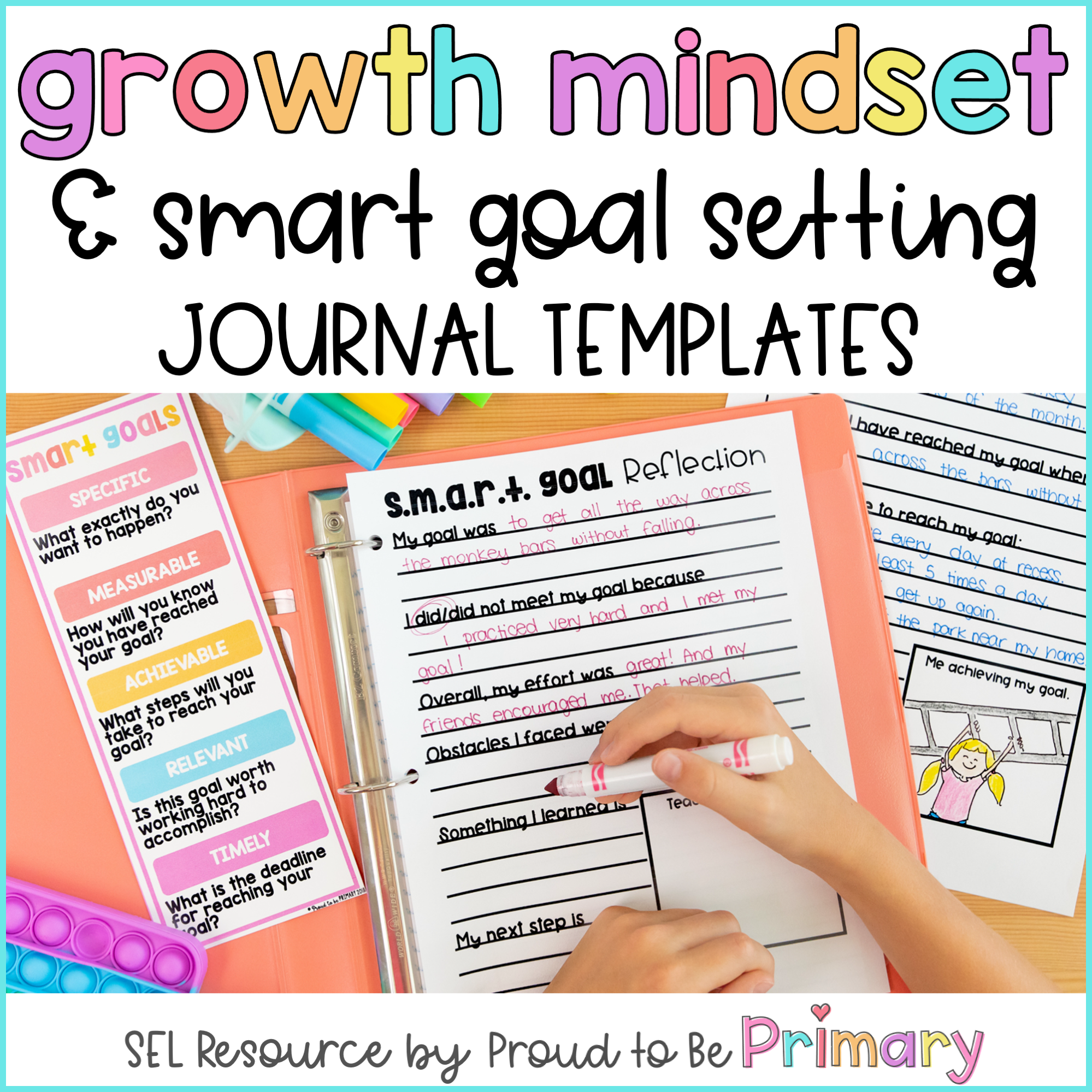
Developing a growth mindset and goal-setting skills is important for students. Try both in your classroom with this FREE growth mindset journal, SMART goal-setting poster, and templates.
Students can easily develop, write, and reflect upon the goals.
Click the image below to grab a copy.
Growth Mindset Units
Try the Growth Mindset Unit for K-2 or 3-5 by Proud to be Primary. A great way to start the year, build strong, independent students, and equip them with the tools they need to succeed as adults!


If you like this resource, you’ll love the social-emotional curriculum for K-2 and 3-5!
More Growth Mindset and Goal-Setting Ideas


Teaching a growth mindset in the classroom
PIN for Later


Leave a Comment