

This post may contain affiliate links, meaning I receive a small commission if you make a purchase using these links. As an Amazon Associate, I earn from qualifying purchases at no additional cost to you.
A list of mindfulness activities for kids, including ideas such as yoga, breathing, and focus tools, as well as children’s books.

Mindfulness Activities for Kids: Classroom Ideas
If you’ve ever had a class that struggles with big emotions, quick reactions, or needs a minute to slow down, adding mindfulness activities for kids can make a huge difference in your day.
In the classroom, mindfulness gives students a chance to understand themselves better rather than react in the moment. When students learn to notice their thoughts and feelings, they start to recognize how those emotions impact their choices. Over time, this builds emotional awareness and self-control…two things every teacher could use more of in their classroom.
Teaching mindfulness doesn’t have to be complicated or time-consuming. Even small, consistent moments of practice can help create a calmer, more focused classroom environment. Here are some mindfulness activities for kids to help you get started.
What Is Mindfulness for Kids?
Mindfulness for kids is simply the practice of paying attention to what’s happening right now, what they’re thinking, feeling, and experiencing without immediately reacting. It helps students notice their emotions and body signals instead of being overwhelmed by them.

In the classroom, this might look like taking a few deep breaths, noticing how their body feels, or naming an emotion they’re having. It’s not about being perfectly calm all the time (because… kids), but about helping them slow down and become more aware of themselves.
When to Use Mindfulness in the Classroom
One of the biggest questions teachers have is when to actually fit mindfulness into an already packed schedule. The good news is you don’t need to carve out a huge block of time; mindfulness works best when woven into moments already in your day. Once you start noticing those natural opportunities, it becomes much easier to make them part of your routine.
Here are some of the best times to use mindfulness in the classroom:
Morning meeting
Starting the day with a quick mindfulness activity during the morning meeting helps set the tone for everything that follows. Whether it’s deep breathing, a gratitude check-in, or a positive affirmation, it gives students a calm, focused start rather than jumping straight into the chaos.
After recess
Recess energy is real. Taking just 2–3 minutes to breathe or do a body scan helps students settle their bodies and transition back into learning mode without the struggle.
Before tests
Test anxiety is a big deal for many students. A short mindfulness activity, like guided breathing or visualization, can help calm nerves and improve focus before they begin.
During transitions
Transitions are often where behavior slips. Adding a quick mindfulness moment, such as a quiet minute or a listening exercise, can help students reset and move more smoothly between activities.
After conflict
When emotions are high or after conflict, mindfulness can help students pause and reflect before reacting. Activities like the 5-4-3-2-1 grounding technique or deep breathing give students tools to calm down and process what happened.
End of the day reset
The last few minutes of the day are a great time to slow things down. A quick reflection, gratitude practice, or a quiet minute helps students leave feeling calm rather than carrying the day’s stress home with them.
15 Mindfulness Activities for Kids (Easy Classroom Ideas)
Many strategies can help promote mindfulness in your students. From yoga poses that calm the body to breathing strategies that calm the mind, these mindfulness activities for kids are just what you need. Surely, you’ll be teaching mindfulness in your classroom – easy peasy!
Here are some simple mindfulness activities for kids you can easily use in your classroom. Each one is low-prep and actually doable during a busy school day:
Deep Breathing Exercises
Have students take slow breaths in through their nose and out through their mouth (try counting 4 in, 4 out). This works well during transitions or after recess to help students reset and refocus.

Body Scan
Guide students to notice how each part of their body feels from head to toe. This is great after lunch or before a test to help students release tension and become more aware of their bodies.

Guided Imagery
Walk students through imagining a calm place, such as a beach or forest. Use this during a quiet moment or after a stressful activity to help students relax and mentally “reset.”
Mindful Coloring
Give students time to color, focusing on patterns and colors rather than rushing. This works well as a calm-down center or early finisher activity.
Gratitude Practice
Ask students to share or write one thing they’re thankful for each day. This can be part of a morning meeting and helps shift focus toward positive thinking.
5-4-3-2-1 Grounding
Students name 5 things they see, 4 things they feel, 3 things they hear, 2 things they smell, and 1 thing they taste. This is especially helpful when a student feels overwhelmed or anxious.
Stretching and Yoga
Lead students through simple stretches or yoga poses to release energy and refocus. This works great as a brain break or when students seem restless.

Listening Exercises
Have students close their eyes and listen for as many sounds as they can identify. This builds focus and works well as a quick reset between lessons.
Calm Down Jar
Use a glitter jar and have students watch the glitter settle as they breathe slowly. This is perfect for a calm-down corner when students need help regulating emotions.

Positive Affirmations
Have students repeat simple phrases like “I can handle this” or “I am calm.” This can be part of your morning routine to build confidence and self-talk.
Mindful Walking
Have students walk slowly and quietly, paying attention to each step. This works well in hallways or as a transition to bring energy levels down.
Emotion Check-ins
Ask students to identify how they’re feeling using words, visuals, or a quick scale. This can be done during the morning meeting to build emotional awareness.

Breathing Buddies
Students lie down with a small object (such as a stuffed animal) on their stomachs and watch it rise and fall as they breathe. This makes deep breathing more concrete and engaging.
Quiet Minute
Set a timer for one minute and have students sit quietly and focus on their breathing. This is a quick and easy way to reset the classroom at any point in the day.

Kindness Reflection
Have students think about or share one kind thing they did or saw. This works well at the end of the day to build empathy and a positive classroom culture.

Books that Teach Mindfulness
If you’ve ever tried to teach mindfulness or self-regulation and felt like it just wasn’t sticking, read-alouds can make a huge difference. Pairing stories with intentional discussions and activities helps students actually understand what calming down, noticing feelings, and making better choices look like.
That’s why these Self-Regulation Book Companion Lessons are so helpful. They take the guesswork out of what to say, what to ask, and what to do after the read-aloud. Each book is paired with ready-to-use activities, discussion prompts, and visuals that help students practice real-life strategies.
Here are the books included and how they support mindfulness in your classroom:
My Magic Breath by Nick Ortner
This book focuses on breathing as a calming tool. Students practice simple breathing exercises and learn how to use their breath to manage big emotions.

Listening to My Body by Gabi Garcia
Students learn how to recognize body signals and connect them to emotions. This is perfect for teaching kids how to notice when they’re starting to feel overwhelmed.

The Rabbit Listened by Cori Doerrfeld
This story helps students understand that different situations require different emotional responses. It also builds empathy and teaches the importance of listening.

I Am Yoga by Susan Verde
This book introduces mindfulness through movement and breathing. Students learn simple yoga poses and how movement can help calm both their body and mind.

Charlotte and the Quiet Place by Deborah Sosin
Students explore the idea of finding a quiet space, either real or imagined, to feel calm and focused. It’s great for helping students visualize calming strategies they can use anytime.

Each companion includes structured lessons, discussion questions, and follow-up activities like role-play, drawing, and reflection to reinforce these skills throughout the week.
If you’ve been looking for a way to make mindfulness more meaningful (and less “just take a deep breath”), this kind of resource makes it much easier to teach and for students to actually use.
Other Books For Mindfulness
- Moody Cow Meditates by Kerry Lee MacLean
- Mind Bubbles by Heather Krantz
- Meditation is an Open Sky by Whitney Stewart
- My Mind is My Best Friend by Karina Skye
- A Handful of Quiet by Thich Nhat Hanh
- Imaginations by Carolyn Clarke
- Visiting Feelings by Lauren Rubenstein
- Breathe Like a Bear by Kira Willey
- You Are a Lion! by Taeeun Yoo
- Breath Friends Forever by Laurie Grossman
Find these and more helpful books in our Amazon shop.
Benefits of Mindfulness in the Classroom
Adding mindfulness into your classroom isn’t just another “extra thing”; it actually makes your day run more smoothly. When students learn to manage their emotions, everything from behavior to focus improves.
One of the biggest benefits is increased self-regulation. Students begin to recognize when they’re frustrated, overwhelmed, or distracted, and they have tools to handle it. That means fewer emotional outbursts and less time spent managing behavior.
Mindfulness also helps improve focus and attention. When students practice slowing down and paying attention, they’re better able to stay engaged during lessons.
You’ll likely notice stronger classroom friendships, too. As students become more aware of their own emotions, they also become more empathetic toward others.
It creates a calmer classroom environment overall, which is something every teacher can appreciate.
There are so many mindfulness activities for kids that you can use in your classroom. From books to yoga, these resources will help you teach your students how to be mindful.
Classroom Resources to Help Teach Mindfulness
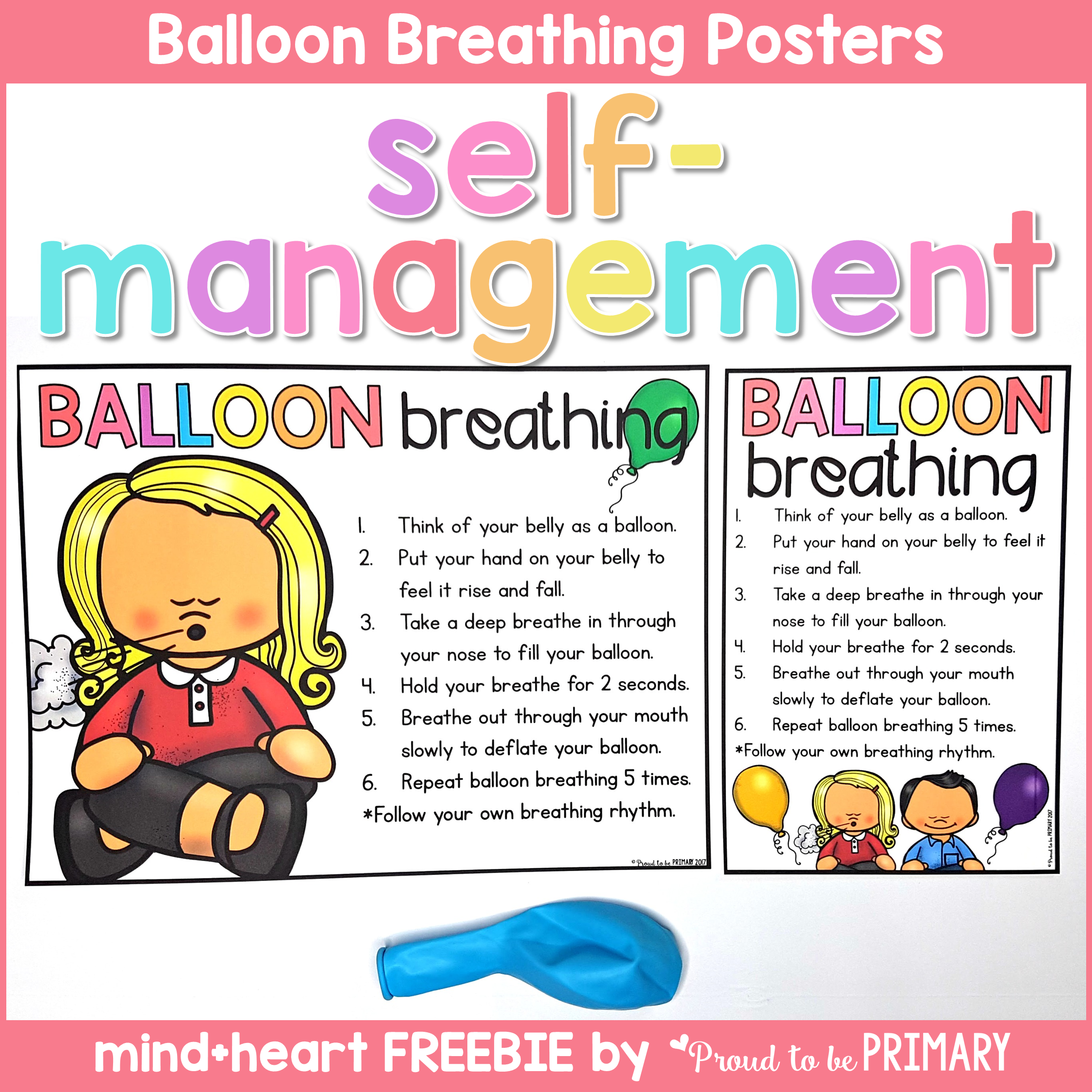
Free Balloon Breathing Posters
Use this poster and technique to teach children how to calm down and self-regulate using balloon breathing. Use the large balloon breathing poster to teach the class, and a smaller one in a child’s calm-down kit.
Click the image below to grab a copy.
SEL Curriculum Resources
If you’ve ever had students who struggle to manage big emotions, stay in control, or bounce back after frustration, you know how quickly it can impact your entire day. Instead of constantly reacting to behaviors, these complete self-management units give you a clear, structured way to teach students how to self-regulate, build self-control, and grow their confidence.
The K–2 Self-Management Unit by Proud to Be Primary focuses on helping younger students understand their emotions and develop self-esteem, while the 3–5 Self-Management Unit builds on those skills with deeper lessons in mindfulness, behavior, and emotional regulation.
Both include ready-to-use activities such as calm-down tools, breathing and yoga cards, discussion topics, and engaging lessons. So you can spend less time figuring out what to teach and more time actually helping your students succeed.


If you love the resources above, you’ll love…
- Calm Down Corner Kit
- Morning Meeting Slides
- Self-Regulation Book Companions
- Emotions Book Companions
Other Mindfulness Activities for Kids


PIN FOR LATER


Leave a Comment