

This post may contain affiliate links, meaning I receive a small commission if you make a purchase using these links. As an Amazon Associate, I earn from qualifying purchases at no additional cost to you.
Whether you’re teaching K-2 or 3-5, you’ll find a wealth of information and resources for teaching growth mindset here. Try these growth mindset activities for elementary students today!

Growth Mindset Activities for Elementary Students
Teaching the actual content is only part of the job. The harder part? Getting kids not to shut down the second something feels hard. You know the moment – the “I can’t do this,” the tears over math, the total refusal even to try. Yeah, that.
That’s where a growth mindset becomes helpful. They’re less of a “bonus” and more of a sanity-saver. Because you can have the most amazing lesson planned, but if your students don’t believe they can figure things out, it’s going nowhere fast. And somehow, you’re expected to fix that while also keeping up with pacing guides, behavior, and everything else piled on your plate.
No matter what grade you teach, kids need help learning how to mess up, try again, and not spiral when they do. A growth mindset helps with all of it, confidence, independence, and let’s not ignore it… behavior. When kids start thinking, “maybe I can do this,” things shift. You get more effort, fewer shutdowns, and way less drama over every little challenge.
So if you’re tired of the constant “I can’t,” here are some easy, actually doable growth-mindset activities that help build resilience without adding one more overwhelming thing to your day.
How to Teach Growth Mindset
When it comes to teaching a growth mindset, kids don’t just “pick it up” on their own. They need to see it, hear it, and practice it… a lot. And yes, that can feel like one more thing on your plate, but when it starts working, it actually makes everything else easier.
Start with your language. The way you respond to mistakes, effort, and challenges sets the tone for your entire classroom. If a student gets something wrong, shift the focus from the outcome to the effort: “You’re still learning this,” or “I can see you’re trying a new strategy.” It feels small, but kids pick up on it quickly.
Next, normalize mistakes. Talk about them openly, model them, even celebrate them a little. When students see that messing up isn’t a big deal (and doesn’t lead to embarrassment), they’re way more willing to take risks and try again. And honestly, that alone can cut down on a lot of frustration and shutdowns.
You’ll also want to give students actual opportunities to struggle productively. That means not jumping in right away to “save” them when things get hard. Let them sit in the challenge for a minute, try a different approach, or ask a peer. It might feel uncomfortable at first, but that’s where the growth happens.
Finally, keep it consistent. Growth mindset isn’t a one-and-done lesson; it’s something you revisit daily through conversations, activities, and little moments throughout the day. Over time, you’ll start to notice a shift. Students will take more ownership, handle challenges better, and maybe (just maybe) stop saying “I can’t” quite so often.
Growth Mindset Activities for Grades K-2
These growth-mindset activities will teach students in kindergarten through 2nd grade how to develop a growth mindset. From practicing positive mantras to reading children’s books, these activities will help change your students’ thought processes.
Growth Mindset Quote Posters
Posters are a simple way to reinforce positive thinking all day long. Growth mindset quotes like “mistakes help me learn” give students a quick reminder when they start to feel stuck. Instead of you constantly repeating yourself, the posters do some of the work for you, helping students slowly build more confidence and resilience.

Social Emotional Learning Curriculum
If your students fall apart over small mistakes (or argue like it’s their full-time job), this is where you start. Building self-esteem isn’t just about “feeling good,” it actually helps kids take risks and try again without shutting down. When students feel more confident and in control of their emotions, they’re way more willing to stick with challenging tasks instead of giving up after one try. Having a specific social-emotional learning curriculum can help with that.
Try a Student-Led Classroom
Giving students a little ownership can make a big difference (and yes, it might feel a little chaotic at first). Team building activities are a great way to show students how they can take the lead in their learning. When they’re working together, problem-solving, and figuring things out as a group, they start to see that mistakes are part of the process. It’s a simple way to show how effort and teamwork actually lead to growth, without you having to spell it out every time.

Teach Kids About the “Power of Yet”
This one is a game-changer, especially for your “I can’t do this” crowd. Start reminding students to add one tiny word: yet. It shifts their thinking from “I’ll never get this” to “I’m still learning.” When you read Giraffes Can’t Dance, it’s the perfect opportunity to talk about how growth takes time. You can even have students use a simple graphic organizer to write or draw what the character struggled with and how they improved.
Encourage Determination
Some kids need to see what perseverance looks like. Reading The Little Linebacker opens the door to talk about not giving up, even when something feels hard or uncomfortable. After reading, have a quick class chat about times they wanted to quit but didn’t, times they did quit, and what they could do differently next time.
Highlight Thoughts and Feelings
This is where things start to click for students. After reading The Girl Who Never Made Mistakes, pause and really dig into it. Talk about how the main character, Beatrice, thinks and feels throughout the story. Ask your students: When was she stuck in a fixed mindset? When did that change? Helping kids recognize those thoughts in a character makes it easier for them to notice them in themselves later.

Kids Write and Draw
This might sound simple, but it’s powerful. When students take time to write or draw positive things about themselves, it builds the inner confidence they need to keep trying. You can turn it into a quick morning routine or center activity. Bonus tip: Have them keep their affirmations somewhere visible because a little reminder in the morning can go a long way before they walk into your classroom.
Growth Mindset Activities for Grades 3-5
Older elementary students also need to learn how to have a growth mindset. As students get older, the skills they learn in school become more difficult to acquire. Because a growth mindset helps students persevere in the face of difficulties, these growth mindset activities are perfect for your classroom. These growth mindset activities include learning about the brain and bullet journaling.
Fixed vs. Growth Mindset
Sometimes the simplest activities stick the most. Start by giving your students the language they need actually to talk about mindset: what a fixed mindset sounds like vs. a growth mindset. Then have them sort phrases, thoughts, or behaviors into each category. You can do this independently, as a whole-class anchor chart, or in small groups. The conversations that come out of this are usually where the real learning happens, especially when kids start recognizing their own thinking patterns.

Create Thought Maps
This is one of those activities that looks simple but gets really deep, really fast. Give students a growth mindset word or phrase (like “perseverance” or “mistakes”) and have them create a thought map around it. They can write, draw, or brainstorm anything that comes to mind. You’ll start to see how they truly understand these concepts, which opens the door to some great class discussions and “aha” moments.
S.M.A.R.T. goal setting
Encourage kids to pursue what they want to learn and set specific goals to stay focused and on track. Setting SMART goals means they are S-Specific, M-Measurable, A-Achievable, R-Relevant, and T-Time-bound.

Bullet journaling
If your students love a little creativity, this is a win. Bullet journaling gives them a space to reflect on their learning without feeling rigid or forced. They can sketch, list goals, track progress, or write about challenges they’ve faced. It’s also a great way for them to look back and see their growth over time, which many kids don’t naturally notice.
Talk About Famous Failures
Kids tend to think successful people just got it right the first time, which obviously isn’t how it works. Sharing stories of well-known figures who failed (a lot) before succeeding helps normalize mistakes. It also gives students real-life examples of perseverance. Bonus: it usually sparks some pretty interesting conversations about effort vs. talent.
Teach About the Brain
The brain is a fascinating subject! You don’t have to know much about brain anatomy to teach a growth mindset. For example, give a simple explanation about how the brain has different parts that work together to control and organize our thoughts. Children will understand that our brains play an important role in our thought processes and behaviors.

Growth Mindset Activities and Resources for All Ages
Regardless of what grade you teach, there are some activities that students of all ages can do. These growth mindset activities are perfect for students of all ages. Students will show growth through activities such as role-playing, using new vocabulary, and reading literature to make connections.

Teach the vocabulary
If kids don’t have the words, they can’t really talk about (or recognize) a growth mindset. Take time to introduce and revisit vocabulary such as perseverance, effort, mistakes, courage, risks, attitude, improvement, challenge, and grit. Don’t just define them, use real classroom examples so it actually clicks. The more students hear and use these words in everyday situations, the more likely they are to start applying them to their own thinking and behavior.
Use a Graphic Organizer
Graphic organizers are an easy, low-prep way to get students thinking a little deeper without overwhelming them. You can use thought maps, Venn diagrams, compare-and-contrast charts, or even simple fact-vs.-opinion organizers to explore growth-mindset ideas. These tools help students visually organize their thoughts, which is especially helpful for kids who struggle to explain their thinking out loud.
Inspire Them with Quotes
Kids love a good growth mindset quote, especially when it’s something they can actually understand. Read quotes together, discuss what they mean, and have students rewrite them in their own words. You can turn it into a quick morning routine or a writing activity. Over time, those little phrases start to stick, and you’ll hear students repeating them back.
Say the Word “Yet”
This is one of the easiest shifts you can make, and it really works. When a student says, “I can’t do this,” casually add “yet.” It’s a small word, but it changes the whole message. Over time, students start picking it up on their own, and you’ll hear “I can’t do this… yet” without even prompting them. It’s a simple way to build a more positive, growth-focused classroom language.
Using Literature to Guide Discussions
Books are one of the best ways to make a growth mindset feel real instead of just something you talk about. Choose stories where characters struggle, fail, and eventually grow. After reading, have open conversations about the growth-mindset book, such as what the character was thinking, what they could have done differently, and how they showed a growth mindset. It helps students connect the concept to real situations in a way that actually makes sense.

Role-Playing Scenarios
This one can get a little loud, but it’s worth it. Give students simple scenarios (such as getting a wrong answer, losing a game, or struggling with a task) and have them act out both fixed-mindset and growth-mindset responses. When kids see and act out the difference, it sticks a lot more than just talking about it. Plus, it leads to some really honest conversations about how they usually react, and how they could respond differently next time.
These growth-mindset activities will help you teach your students all about it. From coloring pages to journal ideas, you can teach your students why a growth mindset is important. Try using these growth-mindset activities with elementary students. You’ll have the chance to see your students’ perspectives on life changes as the year progresses.
Growth Mindset FAQ
What is a growth mindset in simple terms?
A growth mindset is the belief that abilities and intelligence can improve with effort, practice, and the right strategies. Instead of thinking “I’m just not good at this,” students start to think, “I can get better if I keep trying.”
Why is a growth mindset important in the classroom?
Because it directly impacts how students handle challenges. When students believe they can improve, they’re more likely to try, stick with difficult tasks, and bounce back from mistakes, which makes teaching (and learning) a whole lot smoother.
How do you teach a growth mindset without adding more to your plate?
The key is to embed it into what you’re already doing. Use it during read-alouds, class discussions, small group work, and even during mistakes. It doesn’t need to be a separate lesson every day; it’s more about your language and consistency.
What are some signs that students have a fixed mindset?
You’ll notice things like giving up quickly, avoiding challenges, getting frustrated easily, or saying “I can’t” a lot. They may also compare themselves to others or feel like they’re either “good” or “bad” at something with no in-between.
Do growth mindset activities actually help behavior?
Yes, big time. When students feel more confident and capable, they’re less likely to shut down, act out, or avoid work. It doesn’t fix everything, but it definitely helps reduce frustration-based behaviors.
What if students still say “I can’t”?
They will, it’s normal. The goal isn’t to eliminate it but to help them move past it. That’s where simple strategies like adding “yet,” modeling persistence, and giving them time to try again really make a difference.
Growth Mindset Classroom Resources
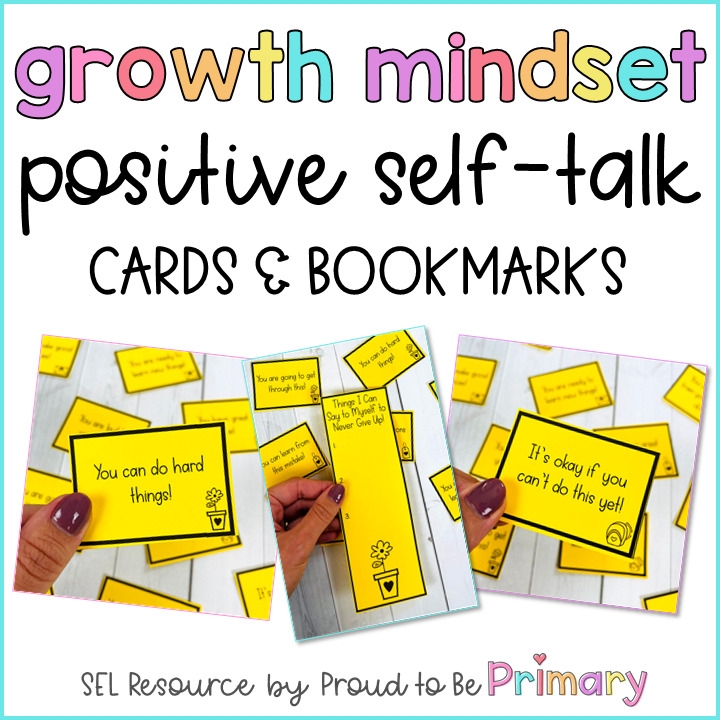
FREE Growth Mindset Cards & Bookmarks
Give kids a bookmark and have them list three positive things they can tell themselves to help them never give up. Print and hand out the note cards to encourage kids when they need it, or give students their own set to read each day.
Click the image below to grab a copy today!
Growth Mindset Curriculum
The complete growth-mindset units for K–2 and 3–5 by Proud to Be Primary include a variety of low-prep lessons and activities to help students build an “I can” attitude without adding more to your plate.
You’ll find read-alouds, vocabulary and sorting activities, writing prompts, and reflection pages that get kids thinking about their learning at their level. Both units also include hands-on options such as role-playing, team-building tasks, and goal-setting activities, along with anchor charts and posters to reinforce concepts throughout the year.
Click the images below to see everything included.


More Growth Mindset Activities

Growth Mindset in the Classroom


PIN FOR LATER


