
Many pattern activities are used to teach kids to identify and create patterns. These activities will keep kids engaged and having fun as they learn this important math skill.

Pattern Activities that Kids Love
Teaching kids about patterning requires the right tools and activities. When learning this math skill, kids need to see examples of patterns as they identify characteristics and predict what comes next. After identifying a pattern, kids can demonstrate mastery of this skill by creating their own patterns using fine-motor skills and a variety of math manipulatives.
No matter what stage of learning kids are in (preschoolers, kindergarten, 1st grade, and beyond), whether they’re beginners or almost masters, these pattern activities will help kids learn patterns, build basic math skills, and apply that knowledge to other math situations.
Table of Contents
- Pattern Activities that Kids Love
- Why Is It Important to Teach Patterns?
- Learning Patterns Through Activities
- Making Patterns Through Activities
- Frequently Asked Questions
- Teacher Tips for Teaching Patterning
- Resources For Teaching Patterns
- Free Pattern Hat
- Mindful Math Patterning Unit
- More Math Resources For The Classroom
Why Is It Important to Teach Patterns?
You know that teaching patterning is necessary, but what about it makes patterns so important? Why does it matter if kids can identify what comes next in a Red-Blue-Red-Blue pattern? Pattern activities help kids develop their number sense and observation skills. When a child looks at a pattern, they observe what they see and make predictions for what should come next.
This math skill serves as an essential foundation in number sense. The observation skills kids develop with patterns are used for more complex math skills, such as addition and subtraction. Since patterns are an important foundational math skill, kids must learn and master the basics. That knowledge can then be built upon, helping kids learn more complicated math concepts.
Learning Patterns Through Activities
To discover patterns, kids need time and the right activity. Pattern activities help kids learn what they need to know in a fun and engaging way. Whether it’s with a game or with a printable, these activities will help kids learn this important math skill.
Kids will learn to observe pattern characteristics and identify what comes next in a sequence. Start with simple patterns, such as an A-B-A-B pattern. Once that’s mastered, kids can progress to more intricate patterns and even a growing pattern.
“I Can” Statement Cards
Using I Can statements for patterns helps students understand the lesson’s goal and take ownership of their learning. Statements like “I can identify a pattern” or “I can create a pattern” clearly explain what students are expected to do. They also make it easy for students to reflect on their learning and for teachers to quickly check understanding.

Manipulative Cards
Give them practice identifying patterns in the world around them or in patterns you create. Show a pattern using manipulatives or cards, and ask students to describe what they notice. Encourage them to explain the pattern’s rule, predict what will come next, and even create their own pattern using the same materials. This helps deepen their understanding and encourages them to talk about their thinking, not just find the answer.

Pattern Books
It might be surprising, but books can be a powerful tool for teaching patterning. With just a few great pattern books and a cozy place to read, students can naturally begin to notice repeating shapes, colors, sounds, and rhythms. Kids love curling up with a book, and they often don’t even realize they’re learning while they read. Reading pattern books also opens the door to great discussions as students point out patterns on each page.
Worksheets & Pattern Printables
Patterning worksheets and printables are effective teaching tools for introducing and reinforcing patterns. They give students a structured way to practice identifying, extending, and creating patterns at their own pace. Printables also provide repeated exposure, which helps students build confidence and truly master math skills like patterning.

Pattern Videos
Teaching kids about patterning can be even more engaging with pattern videos that include songs, chants, and movement to help the learning really stick. Music and rhythm make patterns easier for children to recognize and remember, especially for visual and auditory learners. Videos also give students the chance to clap, sing along, or predict what comes next, turning patterning into an active experience instead of a passive one.
Making Patterns Through Activities
Making patterns is the next step in mastering this math skill. Kids who can create patterns demonstrate an understanding of the skill by applying it to each situation. When making patterns, plan for kids to move around a lot and to use their hands as they apply what they learn to each activity. You can quickly see skill levels and understanding with these fun, hands-on activities for making patterns.
Pattern Games
Kids love to have fun when they’re learning, and patterning is the perfect skill to teach through play. One great way to make patterning engaging is by using pattern games or hands-on activities that keep students actively involved. Learning through play not only keeps students motivated, but it also helps patterns feel meaningful and memorable rather than just another math skill.
Pattern Sort
A fun and effective pattern activity is having students sort cards into specific pattern categories. Students examine each card and decide whether it shows an AB, AAB, ABB, or ABC pattern, placing it in the correct group. This activity encourages critical thinking as students analyze what stays the same and what changes in each pattern. Sorting cards also works well for math centers, small groups, or independent practice while giving teachers an easy way to check understanding.

Make Your Own Pattern
Get ready for some stamping fun using bingo markers or dot markers! This activity is a fun and easy way for kids to practice patterns while exploring colors and creativity. Students can use different-colored bingo markers to create, extend, or copy patterns on paper, making each design unique.
Pattern Book
Kids enjoy making books, so having them create their own pattern books is a fun and meaningful activity. Students can practice using different colors, shapes, and pictures to design a variety of patterns on each page. This activity encourages creativity while reinforcing patterning skills as children explain and label their patterns. Pattern books also make a great keepsake and can be revisited during independent reading or math time.

Pattern Cards
Blocks and cubes are a great way to encourage kids to explore and create patterns through hands-on play. Using these math manipulatives, students can build color and shape patterns, as well as simple number patterns. For extra support, pattern cards that already show part of a pattern and leave a blank space for students to complete are great practice. These cards help guide students’ thinking while still allowing them to apply what they know, making them perfect for centers, small groups, or independent work.

Sticker Patterns
Stickers are quick, easy, and versatile manipulatives that work wonderfully for a variety of activities, including teaching patterns! When introducing patterning, give students a few sheets of stickers and let them explore creating patterns in their own way. They can make simple repeating patterns or challenge themselves with more complex sequences using different colors, shapes, or designs.
Math Journals
Math journals are a fantastic way for students to practice reflecting on and independently thinking about patterns. Providing students with a patterning prompt allows them to write, draw, and explain their thinking in their journals. This helps students not only identify and extend patterns but also develop their reasoning and communication skills.

Learning what makes a pattern and then practicing it is important in mastering this math skill. Pattern activities give kids a hands-on way to practice and demonstrate their skills. Since it’s hands-on, it’s engaging for kids, helping to keep learning fun and exciting.
Frequently Asked Questions
Why is patterning important in early math?
Patterning helps build foundational math skills and supports critical thinking, problem-solving, and logical reasoning. Recognizing patterns also prepares students for more advanced concepts, such as algebra and number relationships.
What types of patterns should students learn first?
Students typically begin with simple repeating patterns, such as an AB or AAB repeating pattern, before moving on to more complex patterns involving shapes, colors, numbers, or growing patterns.
How can patterning be taught beyond worksheets?
Patterning can be taught through games, manipulatives, books, songs, movement, and real-life examples. Hands-on and playful activities often help students understand patterns more deeply.
How do I know if a student understands patterns?
Students who understand patterns can identify, extend, describe, and create their own patterns and pattern core in different ways (with colors, shapes, etc.). Listening to how they explain their thinking and observing their work during activities can give valuable insight.
Can patterning be integrated into other subjects?
Yes! Patterning can be incorporated into literacy, art, music, and science through songs, stories, crafts, and observations in nature.
Teacher Tips for Teaching Patterning
- Start simple and gradually increase complexity as students build confidence.
- Use clear visuals and manipulatives to support understanding, especially for early learners.
- Encourage students to explain their thinking aloud to strengthen their reasoning skills.
- Rotate patterning activities through math centers to keep engagement high.
- Use pattern cards that show part of the pattern to support students who need extra scaffolding.
- Revisit patterning throughout the year using seasonal themes, books, and hands-on activities.
Resources For Teaching Patterns
Free Pattern Hat
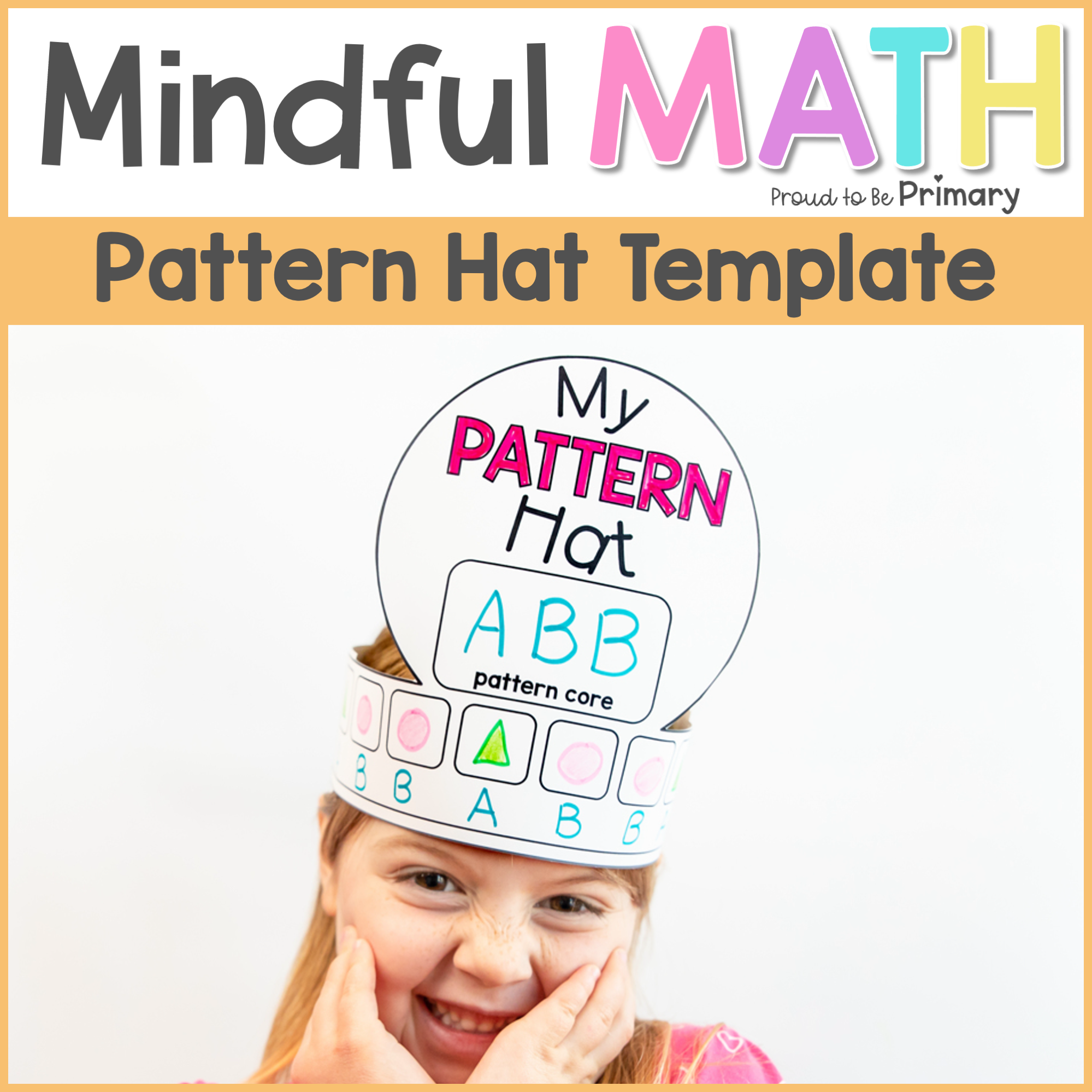
Grab this FREE Pattern Hat Activity to let kids create their own wearable patterns! This hands-on activity lets students design unique patterns using colors, shapes, or stickers while practicing pattern recognition and creation. Perfect for small groups, math centers, or independent practice! Grab your free copy of the pattern hat craftivity by clicking the image below.
Mindful Math Patterning Unit
Try the Mindful Math Patterning Unit by Proud to be Primary. It includes everything you need to teach patterns with confidence, including clear lesson plans, hands-on activity templates, and engaging practice pages. This program takes the prep work off your plate so you can focus on helping students identify, extend, describe, and create patterns in meaningful and fun ways.

If you love this resource, you should try the Mindful Math Kindergarten Curriculum or the Mindful Math First Grade Curriculum.
More Math Resources For The Classroom


PIN FOR LATER


Can I please have a copy of the Pattern Hat?
Hi Alaina. You can get a copy by clicking the image above and signing up with your name and email. If you need assistance, please reach out to support@proudtobeprimary.com
Elyse
Hi- I followed the directions to sign up to the VIP zone and received the details to log in, however the Pattern hat is not in the maths resource library.
Hi Paris. Please email our support team and we’ll email you the free resource you signed up for. Not all freebies are in the VIP area at this time. However if you ever sigh up for a specific freebie you will get that sent directly to your inbox (also check your spam and other folders).
support@proudtobeprimary.com
Elyse