

This post may contain affiliate links, meaning I receive a small commission if you make a purchase using these links. As an Amazon Associate, I earn from qualifying purchases at no additional cost to you.
Teach friendship activities and improve social emotional skills in the classroom with these ideas, such as sharing, taking turns, listening, teamwork, & cooperation.

Friendship Activities and Lessons for K-2
We build relationships with our family, friends, and colleagues every day, and it’s a very natural process for many of us. But for our students, solidifying these skills requires direct instruction.
Teaching friendship skills in the classroom requires making time in our day for thoughtful discussions and community-building activities. Below are various lesson ideas and activity ideas to help build friendship skills in your classroom in a fun way.

Why Include Friendship Activities?
For those children in your class who may not have the necessary skills to make and nurture friendships, you will need to help build those skills and provide opportunities to practice them daily.
You should teach children about healthy and friendly relationships for many good reasons. The atmosphere of your classroom will improve when you include friendship activities in your lessons. The relationships between you and your students will flourish. And, looking at the bigger picture, you will make a positive difference in the world.
Spread kindness in a tough world – Some children you teach come from difficult backgrounds. Show them kindness, generosity, loyalty, trust, and selflessness. By doing this, you help them see that your classroom (and other places outside their home) can be a positive environment. They will learn that they can help share love and kindness with others, even if their home life is different.
The atmosphere of your classroom community – As each child learns new skills, their attitudes and feelings will start to improve. You’ll notice new friendships forming among your students, and your relationship with them will strengthen, too. The activities you choose to teach friendship will impact everyone in your class.
Friendship Activities and Lessons
Friendships and good relationships are built on several key concepts and skills. It’s important to address each one in your purposeful lessons on friendship and relationship skills.
Here are some friendship lessons, activities, and ideas of what social skills and character traits to focus on:
Listening and Speaking
Good listening and speaking skills are essential for children to learn in healthy relationships. Have children practice these things through role-playing, discussion time (learning not to interrupt, speaking respectfully when it’s their turn), and group activities in which everyone must participate equally.

Sharing and Taking Turns
The ability and willingness to share and take turns are necessary skills for young children to adopt. These skills take practice and time for children to understand, especially in the younger grades (Kindergarten and first grade). They don’t use them naturally because of their stage of emotional development. So help them by repeating and practicing friendship activities often!

Sharing with friends and peers is vital in helping students get along with others unselfishly. Help them by providing scripts to practice this important skill. Sometimes, just providing them with the words and sentences they can use in a situation requiring them to share is all it takes to empower them to do so.
Read the book Rainbow Fish for an excellent example of how sharing is important when making and keeping friends. Add this to your list of friendship activities!
How to Be a Good Friend
Children should be able to describe the characteristics of a good friend. They should be able to demonstrate what it means to be a good friend through words and actions. Give them the vocabulary and the understanding they need to apply to their relationships with others and create good friendships of their own.

You can do this by brainstorming ways to be a good friend, sorting good and bad ways to be a friend, and giving them concrete descriptions of ways they can be a good friend.
Making Friends
Sometimes, just trying to make a friend can be intimidating for students. You can teach them that it’s not so scary with friendship activities! By doing so, you give them the tools they need to overcome their anxiety in meeting new people.
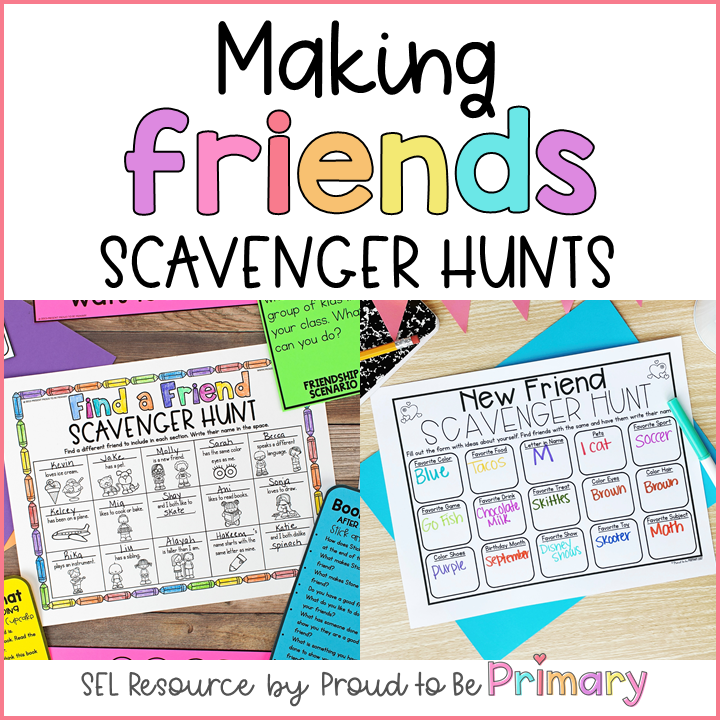
Interviews can help them get to know others. So can friendship activities that require them to find people with things in common, such as having kids find common ground during a scavenger hunt (Grab free ones below).

As a class, students can brainstorm ways to make new friends or share about the new friends they’ve met over a holiday break or just over the weekend. Read the book Peanut Butter and Cupcake for great examples of ways to make friends and write about it. Find more friendship children’s books to add to your classroom bookshelf.

Including Others & Empathy Activities
Emotional cues and behaviors can show whether someone feels included. Good friends try to pay attention to that. Explain to students how to recognize when they can make another child feel welcome as a friend.

Cooperation and Teamwork
Students must learn the necessary life skills of working with others in different social situations. This is true whether working with friends or peers in teamwork activities. This skill is important in the classroom and in life, so give them plenty of opportunities to practice friendship activities.

Friendship Resources
FREE Making Friends Scavenger Hunts
To start, check out this FREE resource – “Making Friends” scavenger hunts. Two worksheets are included that work great for helping kids make new friends and get to know others better.
Download a free copy of the scavenger hunts for your lessons by clicking the image below!
Friendship & Relationships Curriculum
Looking to build healthy friendships with your classroom and teach students the qualities of a good friend? The Friendship SEL Curriculum for K-2 and grades 3-5 includes 5 lessons, scenarios, and fun friendship activities to help build empathy, community, and acceptance in your classroom.

Through various thought-provoking lessons, discussions, community-building ideas, and engaging activities…
- Children will learn how to communicate, listen, and speak effectively.
- Children will learn what sharing and taking turns are.
- Children will learn what a friend is and demonstrate how to be a good friend.
- Children will learn how to make friends and make new friends.
- Children will learn how to cooperate and demonstrate teamwork.
Social-Emotional Learning Curriculum
The mind + heart Social Emotional Learning Curriculum includes 8 units. They include 5+ detailed, character education, research-based lessons filled with hands-on, fun activities. Use the curriculum to encourage children to express themselves and build important emotional and social skills.

More Teaching Ideas to Build Social Skills


friendship skills in elementary

Children’s Books About Friendship
PIN for Later


Leave a Comment