

This post may contain affiliate links, meaning I receive a small commission if you make a purchase using these links. As an Amazon Associate, I earn from qualifying purchases at no additional cost to you.
Picture books aren’t just for fun read-alouds anymore! Use social-emotional books for kids to help teach important SEL concepts and see your classroom’s social-emotional skills improve and flourish.

How to Use Social-Emotional Books Effectively
Within the first week of school, teachers learn a lot about their class. They figure out which students love being outside, who dislike reading, and who need a little more help in their social and emotional development.
Teachers often use SEL books for elementary students to support their lessons. They use these picture books not only to entertain students but also to build social-emotional skills.
So, how can teachers effectively use picture books and activities to help teach social-emotional skills?
Why Social Emotional Books Matter
Social emotional books do so much more than tell a story – they help children understand themselves and the world around them.
Through relatable characters and real-life situations, students begin to recognize emotions, build empathy, and learn to handle challenges positively.
Using books to teach social-emotional learning helps students:
- Identify and name their feelings
- Build empathy and understand others’ perspectives
- Develop problem-solving and decision-making skills
- Strengthen communication and social skills
- Grow confidence and a positive mindset
Best of all, books create a safe space to explore big emotions and important life lessons, without putting any one child on the spot. They open the door for meaningful conversations that might not happen otherwise.
How to Use Social Emotional Books Effectively
Reading a social-emotional book is a great start, but the real impact comes from how you use it.
When deciding which books to use in your classroom, start by thinking about your students and their needs. Are they working on friendship? Self-regulation? Kindness? Choosing books with a purpose helps your lessons feel more meaningful and targeted.
From there, you can turn any picture book into a powerful SEL lesson using a simple, repeatable routine.
Before Reading: Activate Thinking
Set the stage before you begin reading to help students connect to the topic. This helps students connect the topic to their own experiences and prepares them to think more deeply as they listen.
Try:
- Asking a question related to the theme – “Have you ever felt left out?”
- Introducing key vocabulary (kindness, frustration, empathy, etc.)
- Making predictions based on the cover or title
- Introducing important vocabulary (empathy, respect, self-control)
- Connecting to a recent classroom situation
Tip: This quick step gets students thinking and ready to engage with the story.
During Reading: Pause & Discuss
As you read, pause at key moments to guide discussion and deepen understanding.
Try:
- Asking open-ended questions throughout the story to check for understanding – “Why do you think the character did that?”
- Discussing important topics and new vocabulary as they come up
- Noticing character emotions and actions – “How is the character feeling right now?”
- Predicting outcomes – “What do you think will happen next?”
- Encouraging students to make connections to their own experiences – “Have you ever felt this way?”
Tip: Choose 2–3 intentional stopping points instead of stopping on every page.
After Reading: Apply & Reflect
This is the most important step – helping students take what they learned and apply it to their own lives. Without this step, the lesson often stays in the story rather than translating into real behavior.
Try:
- Creating an anchor chart to connect the story to the SEL skill
- Discussing the lesson or message as a class
- Selecting simple activities that help students practice the skill
- Completing a writing activity to reflect on the book and their own experiences
Examples of follow-up activities:
- Brainstorming strategies (e.g., “Ways to Solve a Problem” or “How to Show Kindness”)
- Role-playing different choices a character could make
- Drawing or writing about a time they felt the same way
Tip: Keep it simple and consistent so students know what to expect each time. This step turns the story into real-life learning students can use every day.
When you use this simple routine consistently, social-emotional books become more than just a read-aloud – they become a powerful tool for teaching real-life skills your students will use every day.
Social-Emotional Book Chats
It’s not enough to read a social-emotional book if we wish for students to internalize the lesson. Chatting about the book helps direct students to think in a certain way and encourages them to connect and share their thoughts.
Book Chat Example:
The book The Color Monster teaches students how to express feelings and emotions.
While reading The Color Monster, you may ask students questions.
- What do you think this book is going to be about?
- What does it mean when your emotions are mixed?
- How does the monster feel at the end of the book?

Asking simple questions before, during, and after the social-emotional books will help students think more deeply as they listen and reflect.
Anchor Chart
Create an interactive anchor chart with students based on the book and the lesson you are teaching.
Anchor Chart Example:
The book The Cool Bean teaches students what it means to be “cool” (it’s to be kind!).
While reading The Cool Bean, you may:
- Create an anchor chart about what the “cool” kids do, say, and are.
- Have students brainstorm the kinds of things cool kids do, say, and are, and add those to the anchor chart.

Hang anchor charts around the classroom to remind students daily of the social-emotional skills they have learned.
Simple SEL Activities to Pair With Books
Just reading books on social-emotional topics is often not enough for students. They also need to practice thinking about or using the skill. Try activities that help kids understand and practice the social-emotional skills presented in the book.
Examples:
- role play
- drawing/writing
- partner talk
- connection questions
Book Activity Examples:
The book The Dot encourages students to try something new.
Activities you might have students complete while reading The Dot.
- Have students create an original piece of artwork of a dot.
- Create a mobile with different things they want to learn hanging from it.

Interactive social-emotional learning activities make learning more engaging and interesting for students and help them internalize the lesson.
Writing Activities
Have them write a response to wrap up the book and ensure students have understood the lesson and the book’s topic.
Writing Piece Examples:
The book Peanut Butter and Cupcake is about making friends.
Add an easy writing activity for students to complete after reading Peanut Butter and Cupcake.
- Write five ways to make friends. They can use ideas from the book or their own after a class discussion.
- Write about a time they made a new friend and share their experience.

As a teacher, you likely see reading social-emotional books as an opportunity to create a well-rounded lesson. These lessons may include creating an anchor chart, having a book chart, or completing a book activity. All in all, these allow students to internalize what they have learned.
Teacher Tips for Choosing the Right SEL Books
Not all social-emotional books are created equal. Choosing the right ones can make a big difference in how effective your lessons are.
Keep these tips in mind:
- Start with your students’ needs – Think about what your class is currently working on – friendship, managing emotions, problem-solving, or respect.
- Look for relatable characters and situations – Students connect best with stories they can see themselves in.
- Choose books that spark discussion – The best SEL books naturally lead to questions, reflection, and conversation.
- Focus on one clear skill or message – Books with a strong, simple theme are easier for students to understand and apply.
- Keep it age-appropriate – Look for language, illustrations, and concepts that match your grade level.
- Revisit favorite books often – Reading a book more than once helps reinforce important skills and deepen understanding.
Remember: the goal isn’t just to read a book – it’s to create meaningful learning experiences your students can carry into real life.
Looking For Specific Social-Emotional Topics?
Are students struggling with a specific social-emotional skill in the classroom? Many read-aloud choices can help students develop the SEL skills they need to succeed in the classroom and in the real world.
So, here are book activities for important SEL topics.
- Kindness Activities For Kids
- Self-Esteem Activities & Books for the Classroom
- Teaching Growth Mindset with Books
- Books Teaching Respect and Manners
- Empathy Activities For Kids
- Friendship Lessons & Book Activities
- Self-Regulation Lessons for Children’s Books
Whether students need help with empathy or are struggling with a growth mindset, read-alouds and book companion activities can strengthen their social-emotional skills and help them become better students, friends, and, eventually, adults.
FAQ About Social Emotional Books
What are social emotional books?
Social-emotional books are stories that help children learn important life skills like understanding emotions, building friendships, showing empathy, and solving problems.
These books often feature characters facing relatable challenges, giving students a chance to see how different situations can be handled in positive ways.
How do you teach SEL with books?
Teaching social-emotional learning with books involves more than just reading the story.
Use a simple routine:
- Ask questions before, during, and after reading
- Pause to discuss key moments and emotions
- Connect the story to real-life situations
- Follow up with activities like writing, role play, or class discussions
This helps students understand the message and apply it in their own lives.
What age are SEL books for?
Social-emotional books can be used with students of all ages, but they are especially powerful in early childhood and elementary classrooms.
Picture books are ideal for kindergarten through third grade because they present important concepts in a simple, engaging, and relatable way.
Older students can also benefit from SEL books through deeper discussions, reflection, and connection to real-life experiences.
Social-Emotional Book Companions
Book companions are resources to accompany the stories you read. Therefore, using them helps teach students social-emotional skills and ensures they learn as much as possible from the books you share.
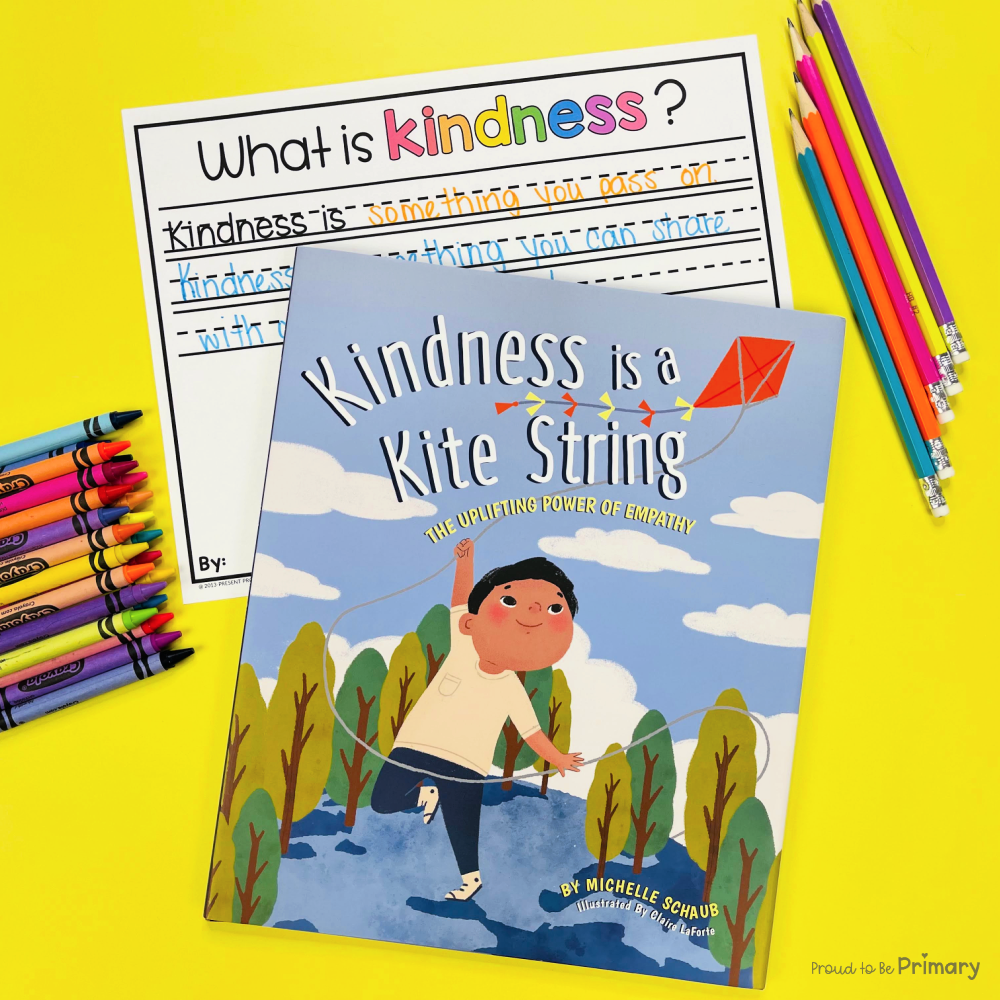
Free Kindness is a Kite String Book Companion
Try using a social-emotional book in the classroom with this FREE Kindness book companion for the book Kindness is a Kite String.
This social-emotional learning resource includes book chat questions, a kindness writing prompt, a directed drawing activity, and a kindness calendar kit.
Click the image below to grab a copy.
Social-Emotional Book Companion Bundle
Are you looking to make your SEL read-alouds more meaningful? Try the Social-Emotional Book Companions Bundle by Proud to be Primary. Students will enjoy listening to a great selection of picture books while learning valuable SEL skills.

Each book companion has over six activities, including writing prompts. book activities and book discussion questions focused on comprehension and social-emotional skills.

Are you looking for a specific social-emotional book companion? Check out all of the book companions available right here!
More Social-Emotional Learning Ideas

Integrate Social-Emotional Learning


PIN for Later


Leave a Comment