

7 important ideas for teaching emotional self-regulation skills: Help your students develop self-control and self-esteem in the classroom when they feel frustration and other strong emotions!

We often need resources and ideas for classroom students who have yet to learn specific social and emotional skills. For instance, students need help self-regulating their emotions and managing their behavior. As teachers, we can give them the tools and resources necessary for emotional regulation success and development. Continue reading to learn more about those tools to help support a child’s well-being.
Self-Regulation Skills Guaranteed to Help Your Students
Teaching young children involves many moments of joyful exchange with different personalities. Participating in shaping young beings is a privilege and an adventure. The challenge lies with each child’s wide range of social-emotional skills. You may find some that haven’t been taught how to self-regulate or manage their emotions and behaviors. Modeling appropriate behaviors through social story books and other resources is a great start.
Here are some things you can do with your whole class to teach and model social-emotional skills. Use these ideas to teach kids to self-regulate in the classroom.
Table of contents
A Social-Emotional Learning Education
Give students a social and emotional education. Teach them the basics and model it for them. Make an effort to include curriculum and activities in your day that encourage and promote the practice of self-regulating, self-reflecting, and managing their behaviors. Explicit teaching moments are necessary because these skills don’t always come naturally.
Teach and Model: Spend time each day teaching and practicing various ways to calm down. Find self-regulation books to read that show good examples of the behaviors you want them to learn. Model appropriate behavioral responses to stressors, such as taking a deep breath before responding angrily to disappointment.
Coping Skills: Show children ways to cope with their negative emotions. Strategies are as simple as counting to ten, coloring, breathing, refocusing thoughts and behaviors, or finding a constructive independent activity. Think of ways a child’s behaviors and emotions could be used constructively or positively! Help them to see their strengths and gifts and to build on them. Our ultimate goal is to comfort children with out-of-control emotions so that they can communicate respectfully with others and succeed in school and life.
7 Classroom Activities that Teach Self-Regulation Skills
Provide your students with opportunities to practice self-awareness and coping mechanisms. In this way, self-regulation skills come naturally.
Yoga Activities
Teachers have successfully used yoga to calm the body and mind in a stress-relieving activity. Any basic yoga moves are enough to refocus excitement, energy, or frustrations and offer a relaxing few minutes of transition from one activity to the next.

Brain Breaks for Kids
Give your students a break, especially after an emotionally taxing activity or before transitioning to another activity. Brain breaks give students something fun and relaxing to do. An ideal brain break is a physical activity that will take their mind off of things and help them settle into the next task ahead.

Develop their self-esteem
Use positive reinforcement and praise to encourage the character traits you wish to build. Help students build on their strengths and provide them with activities that help build self-esteem, such as this flower self-esteem craftivity. When children believe in themselves and see the value in their efforts and work, they are more likely to succeed and persevere.

Instill Self-Awareness
Sometimes, children need someone to hold up a mirror and help them to “see” themselves as capable and responsible. They may act and react to situations and events without considering how their emotional responses and subsequent behaviors affect others.
There are many ways to cope with big emotions, overwhelming tasks, and interpersonal relationships struggles. We can teach our students these skills to manage these things better independently. Give them the tools with discussion starter cards and interactive anchor charts.

Check-in Regularly
Children need opportunities to acknowledge and express their feelings healthily and respectfully. Denying negative emotions or ignoring them does nothing to help students deal with them effectively. Provide a means to “check in” on a feelings check-in chart to show how they feel about a particular activity or event. Allow them to admit and recognize their emotions as a first step in effectively managing them.

Use a Calm Down Kit
Provide children with a Calm Down Kit to teach them self-control, self-regulation, and self-esteem. Discuss their emotions and behaviors with them and teach them hands-on ways to calm down. Fill a container with motivational items that help children calm down, such as a coloring book, stress ball, glitter bottle, and journal.

Balloon Breathing for the Win
Practice ways to calm down and breathe properly. Use a breathing strategy called balloon breathing to teach students how their belly is like a balloon that expands and deflates as they take deep breaths. This helps children recognize that they can change their reactions to events with focused breathing. It also resets one’s physical and emotional state when angry or excited. Caution: Please instruct kids not to hold their breath and to be careful using a balloon—modeling proper use is key!

Self-Management Social Emotional Learning Resources
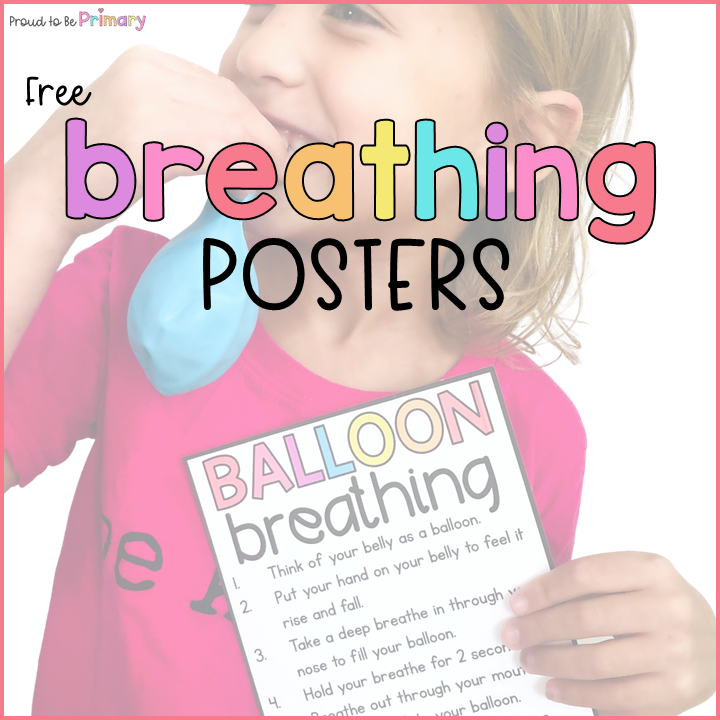
FREE Balloon Breathing Posters
Use this poster and technique to teach children how to calm down and self-regulate using balloon breathing. Use the large balloon breathing poster to teach the class, and the smaller size in a child’s calm-down kit.
Click the image below to get your copy!
Self-Management SEL Unit
This self-management SEL curriculum includes five detailed, research-based lessons to help with self-regulation development. It is filled with hands-on and mindful activities that teach children to self-regulate, calm down, and develop coping strategies, self-control, and self-esteem.

The Self-Management Unit for 3-5 includes many lessons and activities to help older kids self-regulate their emotions and behaviors and develop mindfulness. You’ll find printable and digital resources to teach students self-regulation strategies, mindfulness & yoga, stress management, impulse control, and personal safety.

Social Emotional Learning Curriculum
The mind + heart Social-Emotional Learning Curriculum includes 8 units with 5+ detailed, character education, research-based lessons filled with tons of hands-on and mindful activities that encourage children to express themselves and build important emotional and social skills.

Learn More About Build Social and Emotional Skills


PIN IT


